If you’re an international student who wants to move to Canada, you’ve probably spent a lot of time looking into which careers will give you the best return on your education. You want a job that is not only stable but also pays well and gives you a clear path to permanent residency.
In 2026, one profession continues to stand out at the top of the list for healthcare-minded students: pharmacy. As Canada’s healthcare system evolves to meet the needs of a growing and ageing population, pharmacists have transitioned from behind-the-counter dispensers to frontline clinical providers.
This guide will explain why pharmacy is one of the best-paying fields for international graduates right now, what the actual pay is like in different provinces, and the steps you need to take to go from being a student to a licensed, high-earning professional in Canada.
Why Pharmacy is a Top Choice for International Students in 2026
Canada is going through a strategic change in how it provides health care. Many provinces have broadened the “scope of practice” for chemists to make things easier for hospitals and family doctors. This means that chemists can now give out vaccines, write prescriptions for minor illnesses, and take care of people with long-term illnesses.
Because of this added responsibility, a chemist’s value and pay have never been higher. This field is a rare combination of high demand, prestige, and a salary that is much higher than the national average for international students.
Also, healthcare is still a top priority for Canadian immigration. Getting a pharmacy degree from Canada can make it easier to get into provincial nominee programs because the country wants to keep the skilled workers it trains.
Understanding the Salary Landscape: What Can You Expect to Earn?
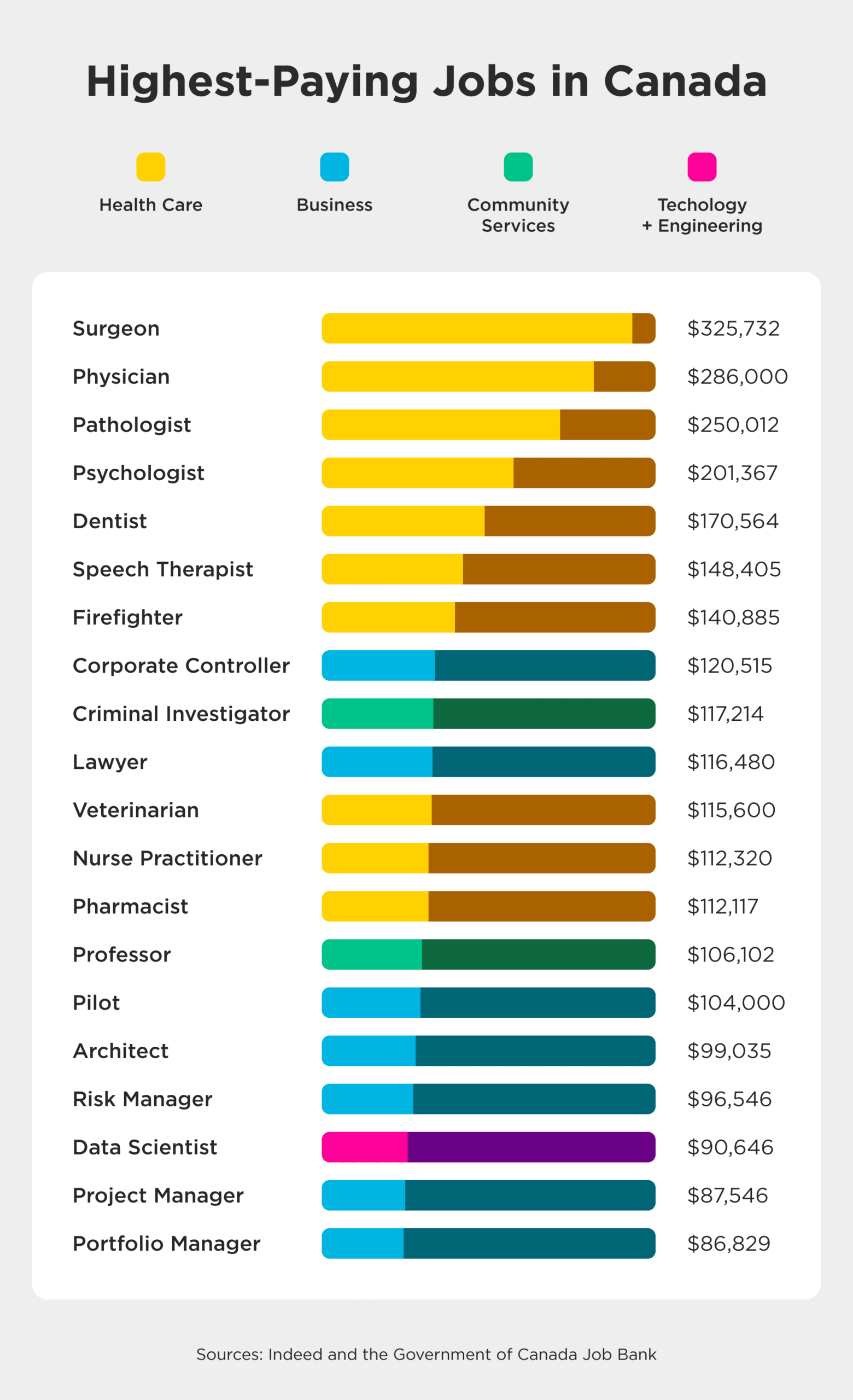
It’s important to look at the hard numbers when we say that pharmacy is a “highest paying job”. In Canada, your salary can change a lot depending on how much experience you have and where you live.
Entry-Level vs. Senior Roles
If you just graduated and are doing your internship or getting your first licence, you could start out making between $75,000 and $90,000 CAD. But once they are fully licenced and working in a store or hospital, their mid-career salaries usually range from $105,000 to $135,000 CAD.
People who work in pharmacy management, specialised hospital jobs, or the pharmaceutical industry (making and researching drugs) can make more than $150,000 CAD.
The Provincial Advantage
Does where you live affect your pay cheque? Absolutely.
- Ontario and British Columbia: High demand and a lot of competition often mean that salaries are around the $110,000 mark, but the high cost of living in cities like Toronto and Vancouver is something to think about.
- The Prairies (Alberta, Saskatchewan, Manitoba): To get good workers, these provinces often pay some of the highest hourly rates in the country. Even entry-level jobs can pay $120,000 or more.
- Rural and Remote Areas: Employers often offer “signing bonuses” and housing allowances on top of a high salary if you are willing to work in northern communities or small towns.
The Pathway: From International Student to Licensed Pharmacist
Getting a job that pays well doesn’t happen right away. For international students, the process is broken down into three steps: education, an internship, and getting a licence.
Step 1: The Educational Foundation
A Doctor of Pharmacy (PharmD) degree is usually required to work as a chemist in Canada. If you are starting from scratch, you must apply to an undergraduate pharmacy program at a Canadian university. You might be able to join an “International Pharmacy Graduate” (IPG) bridge programme if you already have a pharmacy degree from your home country. This programme speeds up your transition to the Canadian system.
Step 2: The Pharmacy Examining Board of Canada (PEBC)
All chemists in Canada must pass the PEBC exams, except for those in Quebec, who have their system. This is a strict two-part test:
- The Qualifying Examination Part I (MCQ): A comprehensive test of your pharmaceutical knowledge.
- The Qualifying Examination Part II (OSCE): The Qualifying Examination Part II (OSCE) is a practical exam that requires you to interact with “patients” (actors) to demonstrate your clinical and communication skills.
Step 3: Practical Training and Internship
You need to do a period of supervised practical training before you can get your full licence. This is often the best part for international students because they get to work in a real Canadian pharmacy, get paid (even though it’s a lower “intern” wage), and make connections that will help them get their first high-paying job.
Practical Examples: Where Do Pharmacists Actually Work?
There are a lot more types of pharmacies than just the one at your local grocery store. The place where you work will affect your daily life and how much money you make. Community Pharmacy (Retail): This field is where most chemists work. You are the public’s face of healthcare. Independent pharmacies and big chains like Shoppers Drug Mart and Rexall pay well and often have the most flexible shift schedules. Independent pharmacies and large chains like Shoppers Drug Mart and Rexall offer competitive salaries and often provide the most flexible shift schedules.
Hospital Pharmacy You work with doctors and nurses in a clinical setting in this job. You work with patients who have complicated health problems, and you often focus on areas like cardiology or oncology. The pay for hospital jobs is similar to that of retail jobs, but the benefits and pension plans are usually better.
The Pharmaceutical Industry People who are interested in the “business” side can work for Pfizer or Moderna in Canada in regulatory affairs, sales, or clinical research. This field often has the highest “ceiling” for salary and executive bonus growth.
The Financial Reality: Managing Your Investment
Is the high pay worth the cost of school? That’s a fair question. The cost of tuition for international students in Canada is much higher than what Canadian students pay.
But when you think about how much a licenced chemist can make—over $9,000 CAD a month before taxes—it’s much more realistic to pay off student loans and start a new life in Canada than in many other fields.
Why is this important? Pharmacy isn’t just a job; it’s an “essential service” job. People still need medicine and healthcare advice even when the economy is dire. This job is recession-proof, which means it offers a level of financial security that many other high-paying tech or business jobs can’t.
Navigating the Immigration Process
The “PR,” or Permanent Residency, is the ultimate goal for many international students. The Canadian government chooses immigrants through the Express Entry system and the Provincial Nominee Programmes (PNP).
Pharmacists are considered ‘high-skilled’ workers because they are in ‘Tier 1’ of the National Occupational Classification (NOC). Some provinces have specific healthcare streams that give pharmacists priority. They may even let pharmacists apply for residency with lower point scores than people in other fields. This means that pharmacy is not only the highest-paying job but also one of the best ways to stay in Canada for a long time.
Challenges to Keep in Mind
While the rewards are high, the path is demanding. As an international student, you will face:
- High Academic Pressure: Pharmacy programmes are competitive and have high entry requirements.
- Language Proficiency: You must demonstrate a very high level of English or French to ensure patient safety.
- Work-Life Balance: Community pharmacists often work evenings and weekends, as pharmacies are essential services that stay open late.
Is This the Right Choice for You?
Think about whether you like science and biology. Do you like working with people and want to help them with their health? Are you adept at meticulous attention to detail and handling significant responsibility?
If so, a career in pharmacy in Canada is probably one of your best options. This is an amazing chance for international students in 2026 because it offers a six-figure salary, a respected position in the community, and a clear path to immigration.
Conclusion: Summarizing Your Path Forward
Choosing a career path in a new country is a big deal. As we’ve seen, pharmacy is a great choice for international students in Canada because of its:
- Exceptional Earning Potential: With mid-career salaries often exceeding $120,000 CAD.
- Stable Demand: Driven by an ageing population and an expanded scope of clinical practice.
- Clear Immigration Routes: classified as a high-skill, high-priority occupation for permanent residency.
The licencing process is strict, and the tuition is a big upfront cost, but the long-term financial and job security is hard to find in other fields. Canada’s healthcare system is ready to welcome you if you are ready for the academic challenge.