SUBMIT YOUR DETAILS
People often consider Germany to be a place where engineers, tech workers, and other highly skilled professionals work. Although this reputation is well-founded, it doesn’t offer a comprehensive view. Germany’s economy also relies heavily on unskilled and entry-level workers, many of whom are immigrants.
If you’re looking for jobs in Germany for unskilled immigrants, you’re in the right place. This guide is for people who want to build a stable working life abroad but don’t have much formal education, professional certification, or work experience.
Here, you’ll find out which industries actively hire immigrants who don’t have any skills, what kinds of jobs are available, what employers usually want, how language affects employment, and what you should realistically expect before applying. No hype, no promises—just useful information to help you make smart choices.
Why Germany Needs Unskilled Immigrant Workers
Germany has one of the strongest economies in Europe, but it is also having trouble finding workers. Because there are fewer local workers entering physically demanding or repetitive jobs, the population is getting older and birth rates are low. So, many industries depend on migrant workers to keep things running.
This demand is especially visible in areas where work involves manual tasks, shift schedules, or seasonal peaks. Unskilled workers play a critical role in maintaining supply chains, food production, housing, healthcare support, and everyday services.
For immigrants, their contribution opens doors that people often don’t see.
What “Unskilled Jobs” Really Mean in Germany
In Germany, the word “unskilled” just means jobs that don’t need:
- A degree from college
- Formal vocational training
- Professional licensing
These jobs still need people who are dependable, hard-working, and on time and can talk to people. A lot of them also give on-the-job training.
In practice, unskilled jobs can serve as a stepping stone rather than a final destination.
Industries Offering Unskilled Job Opportunities for Immigrants
Agriculture and Farm Work
Agriculture is still one of the biggest employers of unskilled immigrant workers. Seasonal workers are important for farms and greenhouses, especially when they are planting and harvesting.
Common agricultural roles include:
- Fruit and vegetable picking
- Greenhouse labor
- Sorting and packaging produce
- Farm maintenance assistance
These jobs are hard on the body, but they often come with housing options and structured contracts.
Agriculture is one of the easiest fields for newcomers to enter because it’s vital to rural areas in Germany.
Food Processing and Meat Packing
Factories that process meat, dairy, baked goods, and packaged foods are part of Germany’s food supply chain. These places are open all year and often hire immigrant workers.
Typical duties may involve:
- Assembly-line food processing
- Packing and labeling products
- Cleaning and sanitation tasks
- Quality control assistance
While repetitive, these roles offer stable employment and predictable schedules.
Cleaning and Facility Services
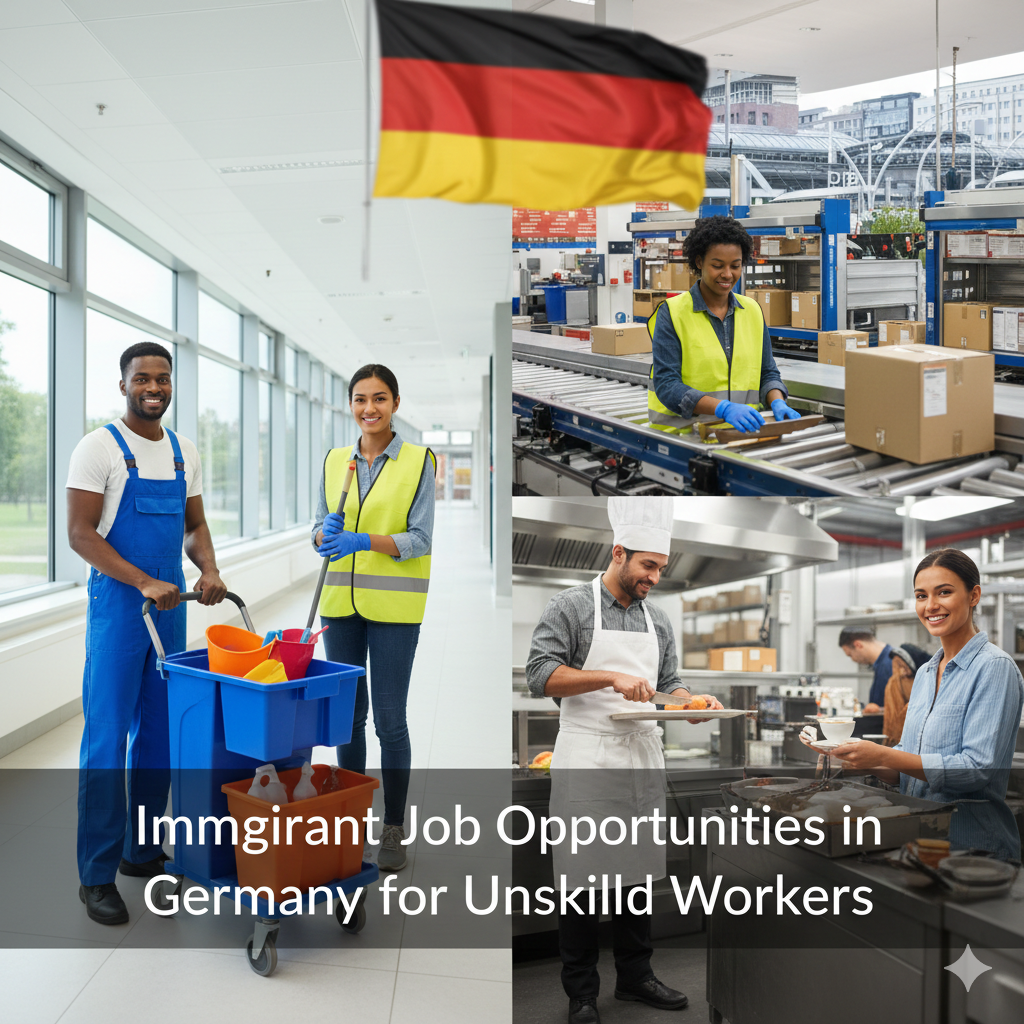
Cleaning services are still one of the most stable jobs for immigrants who don’t have any skills. Schools, hotels, hospitals, offices, and other public buildings require daily cleaning.
Roles include:
- Office cleaning staff
- Hotel housekeeping
- Industrial cleaning assistants
- Hospital sanitation support
These jobs often involve early mornings or night shifts, but they provide regular income and are widely available in cities such as Berlin, Hamburg, and Munich.
Warehousing and Logistics
Deutschland’s role as a logistic hub means that warehouses and distribution centres are always in demand. The growth of e-commerce has made it more important to hire unskilled workers in this field.
Warehouse jobs typically include:
- Order picking and packing
- Loading and unloading goods
- Inventory handling
- Sorting deliveries
Most tasks are learnt quickly, and many employers accept basic German or no German for entry-level roles.
Construction and Manual Labor
Many immigrant workers work on construction sites all over Germany. Many support roles don’t need certification, but skilled trades do.
Unskilled construction jobs may involve:
- Carrying materials
- Site cleaning
- Assisting skilled workers
- Basic demolition tasks
Physical strength and safety awareness matter more than formal education here.
Hospitality and Food Services
Hotels, restaurants, and catering services are always looking for unskilled workers, especially in areas with a lot of tourists.
Common roles include:
- Kitchen assistants
- Dishwashers
- Hotel cleaners
- Food service helpers
These jobs are often easier to access in larger cities or seasonal destinations.
Elderly Care and Support Roles
As Germany’s population gets older, there is a need for care support staff. Nursing requires training, but many places hire assistants to do things that aren’t medical.
Such roles may involve:
- Helping with daily routines
- Cleaning and meal assistance
- Companionship and supervision
Over time, some workers choose to pursue basic care training to advance their careers.
Do You Need to Speak German for Unskilled Jobs?
Language expectations depend on the job and location.
In many unskilled roles:
- Basic German is helpful but not always required at entry
- Employers may rely on supervisors or multilingual teams
- Visual instructions and task-based training are common
However, learning basic German significantly improves:
- Job stability
- Workplace safety
- Promotion opportunities
- Daily life outside work
Even simple phrases can make a noticeable difference.
How Immigrants Typically Find Unskilled Jobs in Germany
Recruitment Agencies
Many companies use agencies to find foreign workers, especially in agriculture, logistics, and food processing. These agencies help find jobs for people who are looking for work.
Local Employment Offices
Germany has official job services that post job openings and help employers find workers. These platforms are essential, even though access depends on where you live.
Community Networks
Among immigrant groups, word-of-mouth referrals are still one of the quickest ways to get unskilled work.
Online Job Portals
Job boards on the internet have some listings, but jobs that don’t require any skills tend to fill up quickly.
Caution is important no matter what channel you’re using. Stay away from offers that promise guaranteed visas or pay that is way too high.
Work Permits and Legal Considerations
There are rules for unskilled jobs in Germany. Most foreign nationals need legal permission to work, but EU citizens do not.
Employers must demonstrate:
- The role cannot easily be filled locally
- Employment terms meet legal standards
Some industries operate under seasonal or labour shortage agreements. Immigration rules change a lot, so you should treat all information as general advice, not legal advice.
Working Conditions and Pay Expectations
Unskilled jobs in Germany are governed by labour laws that regulate:
- Minimum wage
- Maximum working hours
- Paid leave
- Workplace safety
There are laws in place to stop exploitation, even though pay varies by industry and area. But the work can still be hard on the body, and you should include living costs in your budget.
Common Challenges Unskilled Immigrants Face
Understanding potential difficulties helps manage expectations.
Typical challenges include:
- Physically intense workloads
- Language barriers
- Housing shortages
- Bureaucratic processes
- Limited career progression without upskilling
Many immigrants overcome these challenges gradually by building experience and learning the language.
How Unskilled Jobs Can Lead to Better Opportunities
For many immigrants, unskilled work is not the end goal—it is the starting point.
Over time, workers often:
- Move into supervisory roles
- Transition to skilled positions through training
- Change industries
- Secure more stable contracts
Germany places a high value on consistency and reliability, which can lead to opportunities beyond entry-level roles.
Practical Tips Before Applying
- Be honest about your experience
- Prepare for physical demands
- Learn basic German phrases
- Budget carefully for your first months
- Verify job offers through official channels
- Avoid middlemen who request large upfront fees
Preparation reduces risk and increases confidence.
Is Germany a Good Option for un-skilled Immigrants?
Germany does not offer quick money or comfort. It offers structure, protections for workers, and real chances for people who are willing to work hard.
Unskilled immigrants who succeed in Germany usually share three traits:
- Patience
- Willingness to adapt
- Long-term thinking
Progress may be slow at first, but stability often follows.
Conclusion: Building a Foundation Through Unskilled Work
There are real job opportunities for unskilled immigrants in Germany, but they need to be realistic and plan carefully. These jobs, which range from farms and factories to warehouses and cleaning services, keep the economy going and give new people a chance to get started.
If you are prepared to work hard, learn gradually, and respect the system, unskilled employment in Germany can become the foundation for a more secure future. It may not be glamorous, but for many immigrants, it is the first meaningful step toward long-term stability and growth.